Mommy Makeover in San Diego: Your Body Has Done Something Amazing. You Still Get to Have Options.
Dr. Banafsheh Sharif-Askary | BSA Plastic Surgery, La Jolla
Your body grew a person. Maybe more than one. It stretched, adapted, recovered, and kept going—often on very little sleep.
That deserves respect.
You can appreciate everything your body has done and still wish your breasts fit your bra differently. You can love your children and feel frustrated by loose abdominal skin. Those feelings can exist together.
As a mother and a plastic surgeon, I want women to feel comfortable having that conversation without apologizing for it.
A mommy makeover offers options for changes that pregnancy, breastfeeding, and weight fluctuations can leave behind. There is no requirement to change anything—and no deadline for deciding.
What is a mommy makeover, exactly?
Despite the name, a mommy makeover is not a standard package. It is a personalized surgical plan based on your anatomy, priorities, health, and available recovery time.
It may include:
- A tummy tuck: Removes excess abdominal skin and can repair separation of the abdominal wall.
- Breast surgery: A lift, augmentation, reduction, or a combination, depending on whether your concern is volume, position, size, or shape.
- Liposuction: Addresses localized fat in selected areas, such as the waist, flanks, back, or thighs.
You do not have to choose every procedure. Sometimes one focused change addresses what bothers you most. Sometimes staging surgery makes more sense.
My job is to help you understand those choices and build a plan that fits you.
When is the right time?
The right time is when your body is ready, your health supports surgery, and you have room in your life to recover.
In my practice, I generally look for:
- Completed plans for pregnancy. Another pregnancy can change your results, particularly after abdominal surgery.
- Time after breastfeeding. I generally prefer at least six months after weaning, with breast size stable before planning breast surgery.
- A stable, sustainable weight. Ideally, your weight has been stable for approximately six months.
- Good overall health and a realistic support plan. We also review medications, nicotine use, and individual surgical risks.
Some women are ready a few years after having children. Others come in decades later.
There is no expiration date on taking care of yourself.
Plan the recovery before you plan the surgery
One of the most useful questions at a consultation is: “Who will help you at home?”
Because “I’ll figure it out” tends to become “I accidentally lifted my toddler.”
Arrange help with childcare, meals, transportation, laundry, and household tasks before surgery. You will need a responsible adult with you initially, and lifting restrictions can continue well beyond the first week or two.
A few practical preparations make a difference:
- Set up a comfortable recovery area with essentials within reach.
- Have loose clothing that opens in the front.
- Arrange school drop-offs and pickups.
- Put someone else in charge of lifting children, carrying car seats, and bath time.
- Plan time away from work based on your procedures and how physical your job is.
And please give yourself permission to accept the help you arranged.
Why I may recommend more than one surgery
I understand the appeal of doing everything at once: one anesthetic, one recovery, one stretch of asking for help.
But combining procedures adds operating time and can increase the demands on your body.
In my practice, we generally aim to keep combined procedures under six hours. That is a planning guideline, not a guarantee of safety or a cutoff that applies to everyone. Your health, the procedures involved, and your individual risks matter too.
If your wish list would make surgery too lengthy or recovery too demanding, I may recommend stages.
Six weeks of compression: what it does and why it matters
After a tummy tuck or liposuction, I generally ask patients to plan for approximately six weeks of compression, with the garment and wearing schedule tailored to their surgery and healing.
Gentle compression can help manage swelling and provide support and comfort while tissues recover. It does not replace activity restrictions, walking, or follow-up appointments, and tighter is not better.
Your garment should feel supportive. It should not cause pain, numbness, skin discoloration, or difficulty breathing. If it rolls into your incision, creates pressure points, or feels excessively tight, contact us so we can adjust the fit.
We will explain when to wear it, when to remove it for bathing, and whether your needs change during recovery.
You do not need to shop for the smallest garment you can squeeze into. You need the right garment for your healing body.
What bra should I wear after breast surgery?
Plan on a soft, supportive bra without underwire, often with a front closure to make getting dressed easier.
Underwire can press or rub against healing incisions, particularly along the breast crease. We will guide you on the appropriate bra and when you can return to underwire based on your procedure and incision healing.
Avoid buying an entire new bra collection immediately. Swelling settles, your shape evolves, and your early postoperative size may not be your final size.
What is recovery actually like with children?
You will still be their mom. You just cannot be the person who does every physical task for a while.
Expect soreness, swelling, fatigue, and temporary limitations. Short, frequent walks are part of recovery, but feeling better does not automatically mean you are cleared to lift or exercise.
Let children sit beside you for a story rather than picking them up. Arrange quiet activities. Explain ahead of time that you are healing and need gentle hugs.
We will give you specific guidance about driving, exercise, lifting, and returning to your usual routine. After abdominal surgery, lifting restrictions commonly last several weeks, often around six weeks, depending on your repair and recovery.
Do I have to get breast implants?
No.
If your main concern is sagging, a breast lift may be appropriate. If you want less breast volume, a reduction may be a better fit.
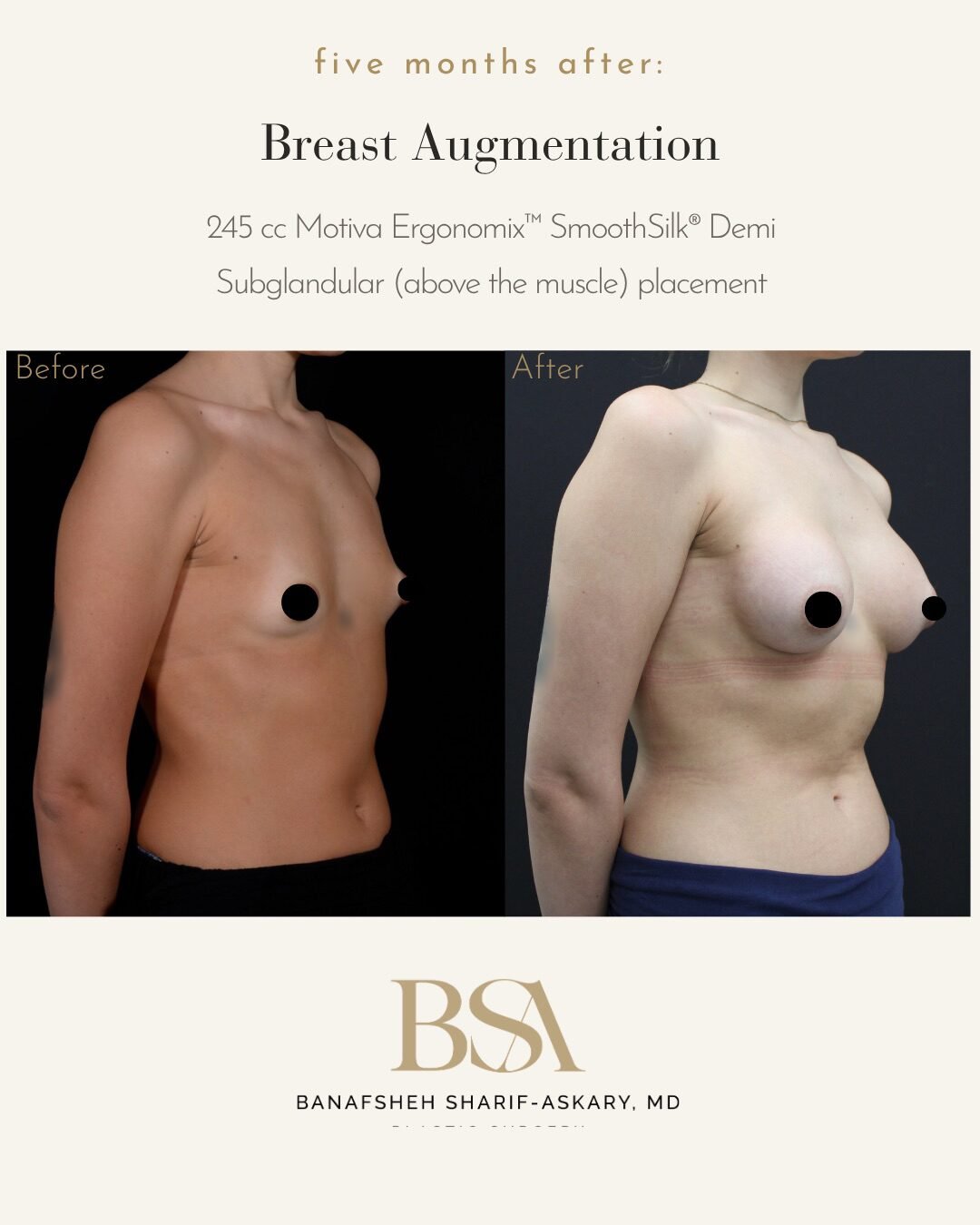
For women seeking added fullness, implants and fat grafting offer different possibilities. Implants can provide a more substantial, predictable increase in volume. Fat grafting uses your own tissue for a generally more modest increase, and some transferred fat is naturally reabsorbed.
Neither option is right for everyone. We will discuss your anatomy, goals, tradeoffs, and any ongoing follow-up requirements.
What does “muscle repair” mean?
Pregnancy can stretch the connective tissue between the two vertical abdominal muscles, creating a separation called diastasis recti.
During a tummy tuck, repair typically involves tightening that stretched connective tissue with sutures, bringing the abdominal muscles into a closer position.
Exercise can improve strength, but it cannot remove excess skin or reliably correct every degree of separation. We will assess what is contributing to your abdominal contour before recommending treatment.
What about scars, including my C-section scar?
A tummy tuck usually leaves a low abdominal scar, with its length determined by how much skin needs to be removed. A full tummy tuck also typically involves a scar around the belly button.
An existing C-section scar can often be removed with the excess lower abdominal skin, depending on its location.
Breast lift and reduction scars vary with the technique. Liposuction uses smaller access incisions.
I will show you where scars are expected and discuss how they may heal. Scar quality varies, and no surgeon can promise an invisible scar.
When will I see my results?
You may notice changes early, but the first few weeks are still recovery—not the finished result.
Swelling changes over time, tissues settle, and scars mature over many months. Your breasts and abdomen may also heal at different rates.
We will follow your progress and help you understand what is expected at each stage.
How much does a mommy makeover cost in San Diego?
The cost depends on the procedures, complexity, operating time, and surgical setting.
After your consultation, we will provide an individualized quote and explain what it includes, along with any separate charges. You should understand the financial plan before deciding to move forward.
You deserve information without pressure
Women do extraordinary things every day, often while putting themselves last. Wanting to explore surgery does not diminish any of that.
My role is to listen, explain what is possible, and be honest about the recovery and tradeoffs. You get to decide whether surgery fits your life—and when.
If you are considering a mommy makeover in San Diego, I would be happy to meet with you at BSA Plastic Surgery in La Jolla. Bring your questions, your priorities, and your concerns. We will start there.
Results vary. Surgical suitability, risks, and recovery instructions are individualized during consultation.
Request Your Consultationrelated articles

By Dr. Banafsheh Sharif-Askary, plastic surgeon and Assistant Professor of